
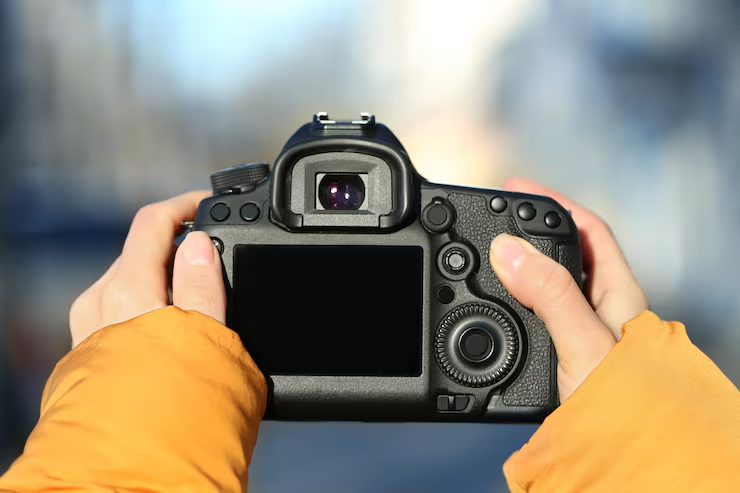

There’s a moment every serious photographer reaches when they start questioning what their camera is actually capable of. Not in terms of megapixels or burst speed — but in terms of what light it can physically detect. The answer, for most unmodified cameras, is surprisingly narrow. You’re only seeing a fraction of what’s in front of the lens.
That’s not a flaw in the camera. It’s by design. But once you understand it, going back feels hard to justify. A full spectrum converted camera doesn’t just extend your creative range — it redefines what photography even means for the people who pursue it seriously.

Understanding What the Conversion Actually Changes
The filter that’s been limiting you all along
Every digital camera sensor is, by default, sensitive to a much wider range of light than you’d expect — including ultraviolet and near-infrared. Camera manufacturers add a filter in front of the sensor specifically to suppress those wavelengths. The reasoning is practical: standard colour photography looks more natural when UV and IR are blocked, because the sensor would otherwise render skies oddly and foliage inaccurately.
But that same filter also blocks things you genuinely want to capture. Hydrogen-alpha emissions from nebulae. The soft glow of infrared light on landscapes. UV-reactive patterns in nature. The conversion process removes the stock filter and replaces it with an optically neutral piece of glass that doesn’t discriminate between wavelengths. Your sensor then sees everything. What you do with that — which wavelengths you isolate — becomes a creative and technical choice you control through filters on the lens.
The sensor doesn’t change. Your options do.
One thing worth understanding: the sensor itself isn’t modified. Its native sensitivity doesn’t change. What changes is what’s allowed to reach it. That distinction matters because it means a properly converted camera retains all its original capabilities — autofocus performance, metering, dynamic range. You’re not trading one thing for another. You’re gaining access to wavelengths that were being quietly filtered out.
Deep-Sky Imaging and Why Modified Cameras Matter
Capturing emission nebulae the way they actually look
Astrophotographers who’ve used a full spectrum modified camera for emission nebula work tend to describe the experience the same way: I didn’t realise how much I was missing. The Rosette Nebula. The California Nebula. The Veil. These objects radiate intensely in hydrogen-alpha — a wavelength at 656nm that sits at the edge of the red channel and gets partially absorbed by a standard camera’s hot mirror.
With the filter gone, those emissions land on the sensor at full strength. The faint wisps of ionised gas that barely register in a standard camera become the main subject. Processing still matters, of course — but the raw data coming off the sensor is fundamentally richer, and that’s not something you can fix in Lightroom.
Narrowband imaging from light-polluted locations
One of the more underappreciated benefits of shooting with a modified camera is what it makes possible from imperfect locations. Light pollution from cities and suburbs swamps broadband imaging, but narrowband filters — isolating hydrogen-alpha, oxygen-III, or sulphur-II — cut through it effectively. The catch is that these filters only perform as intended when the camera’s internal filter isn’t interfering with the transmission wavelengths.
A full spectrum converted body removes that interference. Paired with a quality narrowband filter, you can image from a backyard, a balcony, or a suburb without needing to haul equipment to a dark sky site every time. That practicality alone convinces many astrophotographers to make the switch.
Infrared Photography: A Completely Different Visual Language
Why infrared images look the way they do
Infrared photography has a distinctive aesthetic that’s immediately recognisable — white foliage, near-black skies, high contrast textures, a dreamlike quality to ordinary scenes. It’s not a filter effect or a post-processing style. It’s what happens when you capture near-infrared light, which reflects differently off organic materials like leaves and grass than it does off stone, water, or sky.
Using a 720nm or 850nm filter on a full spectrum converted camera gives you exactly that. Midday sun, which ruins most standard photography, becomes the ideal lighting condition for infrared — the stronger the IR content of the light, the more dramatic the effect. Scenes that look ordinary in visible light become architectural, graphic, and atmospheric.
UV photography and what it reveals
Ultraviolet photography is less common, but it’s genuinely fascinating for the right subjects. Flower petals contain UV-reflective patterns invisible to the human eye but clearly visible to insects — and to a converted camera with a UV-pass filter. Forensic photography, dermatology, and art conservation use UV imaging routinely. For nature and science photographers, it opens a visual channel that simply doesn’t exist in standard imaging.
The full spectrum platform supports UV, visible, and IR work from a single converted body. Three distinct modes. One camera. What you need is the right filter set and some patience learning how each wavelength behaves.
Getting the Conversion Right the First Time
Professional conversion vs. DIY
Camera conversions aren’t impossibly complex, but they involve opening the camera body, removing the sensor stack, replacing the filter, and reassembling everything without introducing dust, misalignment, or focus shift errors. A professional conversion service handles calibration and typically performs a sensor cleaning as part of the process — things that matter enormously to the final image quality.
For astrophotographers and serious landscape photographers, the conversion is an investment in the camera body they already own. It extends the useful life of existing gear while dramatically expanding what that gear can do. Specialist services like AstroGear.net work with both DSLR and mirrorless bodies and can help photographers decide whether a full spectrum conversion or a dedicated astrophotography modification better fits their workflow.
Matching the conversion to your goals
Not every converted camera is converted the same way. A pure full spectrum conversion is the most flexible option — you use lens filters to control wavelengths and can shoot visible, IR, or UV depending on what you put in front of the lens. A dedicated astrophotography conversion goes further, replacing the stock filter with one specifically tuned to pass hydrogen-alpha while maintaining reasonable colour balance for daytime use.
If your primary goal is deep-sky imaging, the astrophotography-specific conversion often makes more sense. If you want a single camera body that handles both night sky work and infrared landscape photography, full spectrum is the smarter choice. Either way, the conversation with whoever does the work matters — knowing your goals upfront leads to a better outcome.
Conclusion
A full spectrum converted camera isn’t a specialty item for a narrow group of enthusiasts — it’s a meaningful upgrade for any photographer who’s ever felt constrained by what their camera can see. Whether you’re chasing emission nebulae from your backyard, shooting infrared landscapes at noon, or exploring the ultraviolet world hiding in plain sight, the conversion opens doors that were always there. The sensor was already capable. The filter was just in the way.